
Ocean King Fishing Game Guide
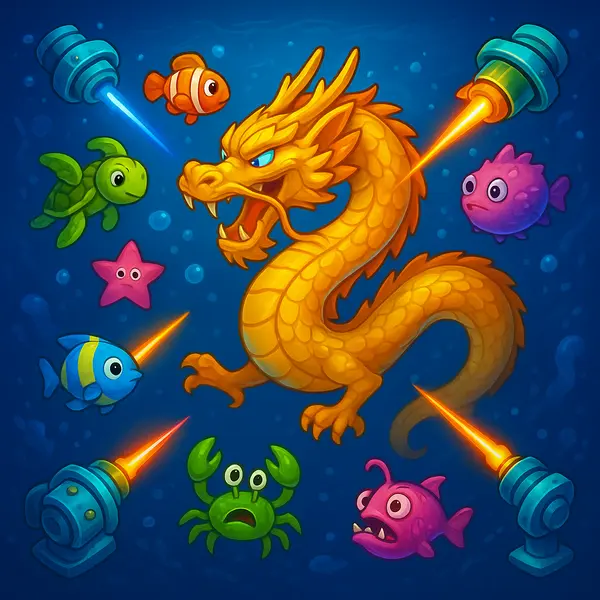
Ocean King is an arcade-style fish hunter game that transforms traditional casino wagering into an active, multi-directional shooting experience. Unlike standard spinning reels or drop-board games such as Plinko, players sit around a digital ocean table aiming cannons at swimming sea creatures. Each projectile fired consumes an amount from the player’s balance, while defeating a target awards a payout based on the creature’s multiplier.
This guide breaks down everything needed to understand Ocean King: fundamental shooting mechanics, weapon tiers, target point hierarchies, special power-up creatures, and multiplayer dynamics. Whether trying a demo at Olymp Casino or navigating an online fish table session, understanding how shot costs relate to target capture rates is essential.
The Core Mechanics of Arcade Fish Hunting in Ocean King
At its foundation, Ocean King operates on a simple premise: your weapon’s ammunition is directly tied to your stake. Every tap or click launches a bullet from your cannon turret. If you set your cannon power to 5 BDT per shot, each projectile deducted from your balance costs 5 BDT upon release.
Bullets in Ocean King do not disappear when they miss an intended target on the first trajectory. Instead, projectiles ricochet off the screen borders until they make contact with a valid fish or leave the playfield after a set number of bounces. This bouncing mechanic prevents wasted ammunition, but firing blindly into dense schools of low-value fish often consumes balance faster than anticipated.
Most digital adaptations feature two essential shooting modes:
- Manual Aim: The player manually directs the turret angle, firing freely into open water.
- Auto-Lock (Target Lock): By selecting a specific target, the cannon automatically aims and fires through lesser fish directly at the chosen boss or high-value creature until it leaves the screen or is captured.
Target Hierarchy: Regular Fish, Special Creatures, and Boss Encounters
Understanding target resilience and payout values prevents rapid bankroll exhaustion. In Ocean King, smaller fish have low health pools and are easily captured with one or two low-power shots, but they offer modest multipliers. Massive bosses and legendary creatures require substantial bullet investment, offering significantly higher returns if captured before they swim off-screen.
Below is an overview of the standard target classes found across Ocean King variants:
| Target Class | Representative Creatures | Multiplier Profile | Typical Bullet Resistance |
|---|---|---|---|
| Small Baitfish | Clownfish, Flying Fish, Butterfly Fish | 2x – 8x | Very Low (1-3 shots) |
| Mid-Tier Marine Life | Sea Turtles, Octopuses, Lantern Fish | 10x – 30x | Medium (5-15 shots) |
| Heavy Predators | Hammerhead Sharks, Golden Sharks | 40x – 100x | High (Sustained fire) |
| Special Power-Up Units | Laser Crab, Drill Crab, Bomb Crab | Trigger Effect / 20x – 120x | High (Vulnerable to burst damage) |
| Legendary Bosses | Thunder Dragon, Leviathan, Fire Phoenix | 100x – 500x+ | Extreme (Requires table-wide focus) |
Capturing small fish creates a steady flow of minor returns, which helps prolong the session. Bosses present high-variance opportunities where multiple players often concentrate fire simultaneously.
Special Weapon Power-Ups and Chain-Reaction Features
The most lucrative moments in an Ocean King session occur when a player successfully captures a special utility creature. These creatures do not merely award static coin multipliers; they trigger screen-clearing events that harvest nearby marine life without consuming additional ammunition.
- Bomb Crab: Upon defeat, this crab detonates an underwater explosion that instantly clears all small and medium fish within its blast radius.
- Laser Crab: Capturing this target equips your turret with a high-energy laser beam for a brief window, cutting across the entire screen and dealing piercing damage to every creature in its line of fire.
- Drill Cannon Crab: Launches a drill projectile that bounces around the perimeter, dragging and destroying multiple targets before finally exploding in the center.
- Chain Lightning (Lightning Fish): Capturing certain glowing fish triggers electrical arcs that jump between identical species on screen, capturing several matching targets at once.
- Vortex Fish: Creates a localized whirlpool that pulls in adjacent fish of the same family, consolidating multiple smaller payouts into a single burst.
Triggering these effects during crowded screen moments maximizes the total payout yielded from a single captured creature.
Multiplayer Table Dynamics: The Last-Hit Mechanism
Ocean King is fundamentally a multiplayer game where multiple players share the same screen space and target pool. Up to four, six, or eight players may fire cannons at identical targets simultaneously.
The underlying calculation determines payout eligibility based on the final hit that depletes the creature’s remaining health or triggers its RNG capture threshold. If player A expends 200 BDT softening up a Golden Shark and player B lands the finishing shot with a 10 BDT projectile, player B receives the full multiplier payout calculated against their own active bet level.
This mechanic introduces distinct multiplayer considerations:
- Crowded Target Risk: Committing heavy fire to a boss while several opponents are shooting the same target introduces the risk of another player taking the final hit.
- Opportunistic Targeting: Monitoring the screen for heavily damaged bosses that other players have engaged can occasionally yield high-multiplier captures with minimal shot expenditure.
- Ammunition Control: Firing at maximum speed often drains funds before a high-value target is secured; measured, timed bursts reduce waste when fish move near edges.
Step-by-Step Walkthrough: An Example Round
To see how these mechanics connect in practice, consider a standard session flow:
- Table Entry and Stake Configuration: A player enters a room and sets the cannon base value to 10 BDT per shot.
- Initial Reconnaissance: The player observes the current school layout. A Laser Crab and several Hammerheads enter from the left corner.
- Engaging Utility Targets: Rather than firing randomly, the player engages Target Lock onto the Laser Crab, spending approximately 12 shots (120 BDT) to capture it.
- Unleashing the Power-Up: The Laser Crab grants a wide-beam weapon. The player aligns the beam through two Hammerhead Sharks and a swarm of Lantern Fish.
- Payout Resolution: The laser captures both Hammerheads (worth 40x each on the 10 BDT base, totaling 800 BDT) plus minor fish yielding an extra 90 BDT. The net gain for the sequence stands at 770 BDT after deducting the 120 BDT ammunition cost.
- Resetting Focus: The player switches back to standard firing mode, waiting for the next favorable wave pattern.
Arcade Fish Tables vs. Online and Mobile Formats
Ocean King originated in physical gaming arcades as large physical tables with joysticks, push buttons, and horizontal display screens. Today, the game exists across diverse digital formats, including browser-based online platforms and downloadable mobile apps.
Physical arcade cabinets rely on joystick positioning and rapid button tapping, requiring physical coordination. In contrast, online and mobile interfaces utilize direct touchscreen tapping or mouse-click targeting. Mobile versions frequently offer dedicated target-locking features, which eliminate the manual aiming error common on smaller touchscreens.
Online platforms also allow flexible balance adjustments in BDT, making it easy to switch between arcade tables and crash titles like Spaceman. Regardless of the platform, the underlying mathematics, target health scaling, and capture probabilities follow the same core arcade fish hunter logic.